Oct 2026
- 5MonSaturn at its brightestUp all night. A small telescope shows its rings.
- 11SunNew moonDarkest nights of the month.
- 21WedOrionid meteorsPeak 21 to 22 Oct. Best after the moon sets, around 2.30am.
- 26MonFull moonMoonlit forest walks.
Gaia Earth Estate - Dreketi, Vanua Levu, Fiji
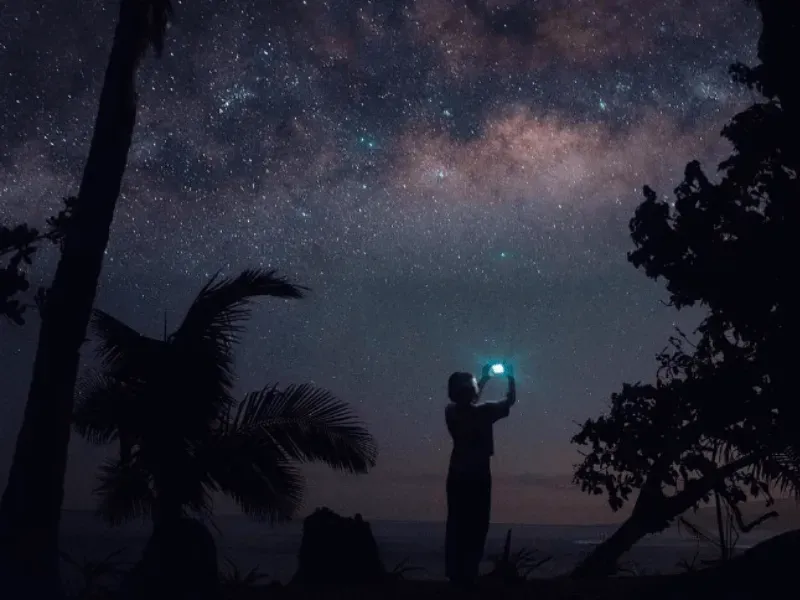
Fiji's 1st dark sky retreat hidden inside 250 acres of the multi-award winning Gaia (Earth) Estate in Dreketi, Vanua Levu (Fiji's second-largest island). Nestled in our protected rainforest within a sanctuary belt (Dreketi River Marine Sanctuary, Nakanacagi Bat Sanctuary and the ruins of an ancient village recently uncovered by archaeologists). Explore the forest and river by day, and experience one of the darkest night skies you will ever see by night.

Gaia (Earth) Estate - home of the International Champion of Champions Green World Award for Sustainability, and home of Dark Sky Fiji
About
Dark Sky Fiji sits inside a 250-acre sanctuary of protected rainforest, bordering over 5 km of the Dreketi River - the deepest river in Fiji and a Marine Sanctuary. There are no city lights for a very long way in any direction, so the sky here is truly among the darkest on Earth.
We blend comfort, curiosity, culture and conservation so you and your family can reconnect with nature and with the universe.
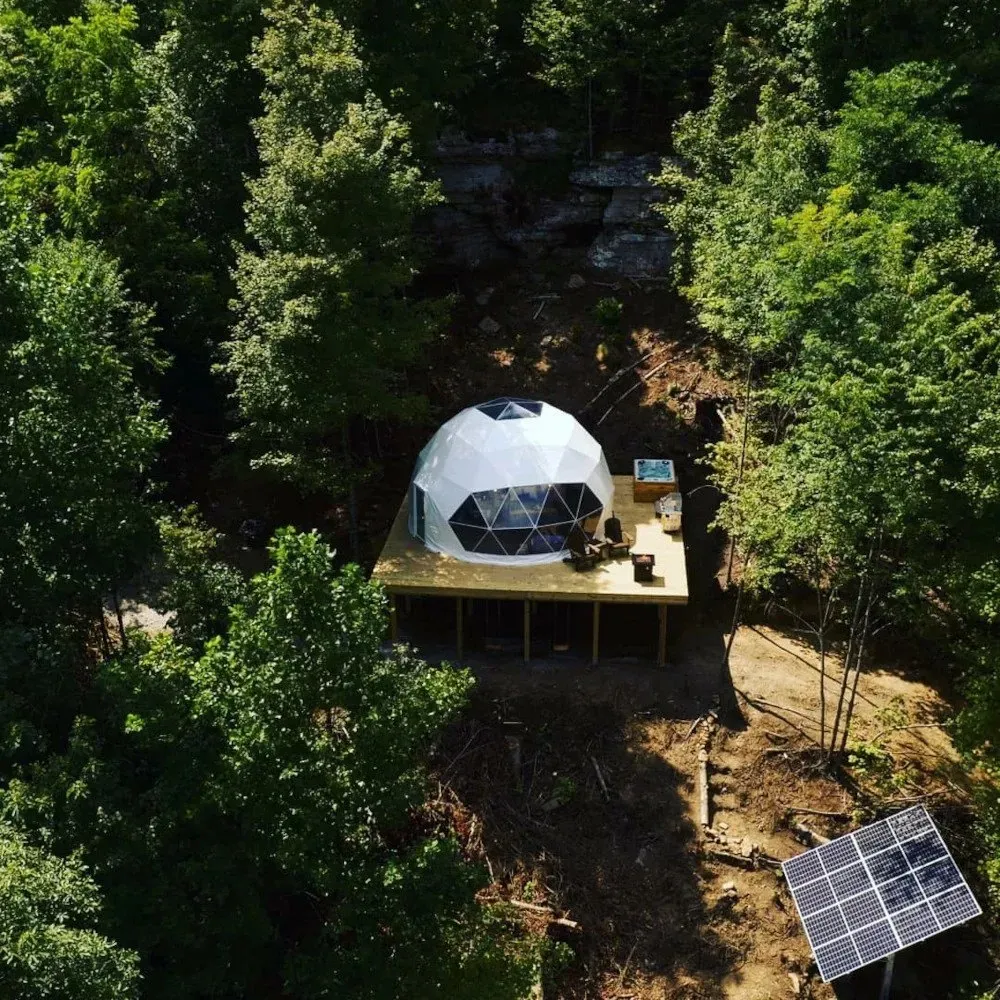
A private stardome and spa in the rainforest, powered by its own solar panels
The experience
Forest bathing by day. Stargazing by night. Self-guided and self-paced adventure.
By day...
By night...
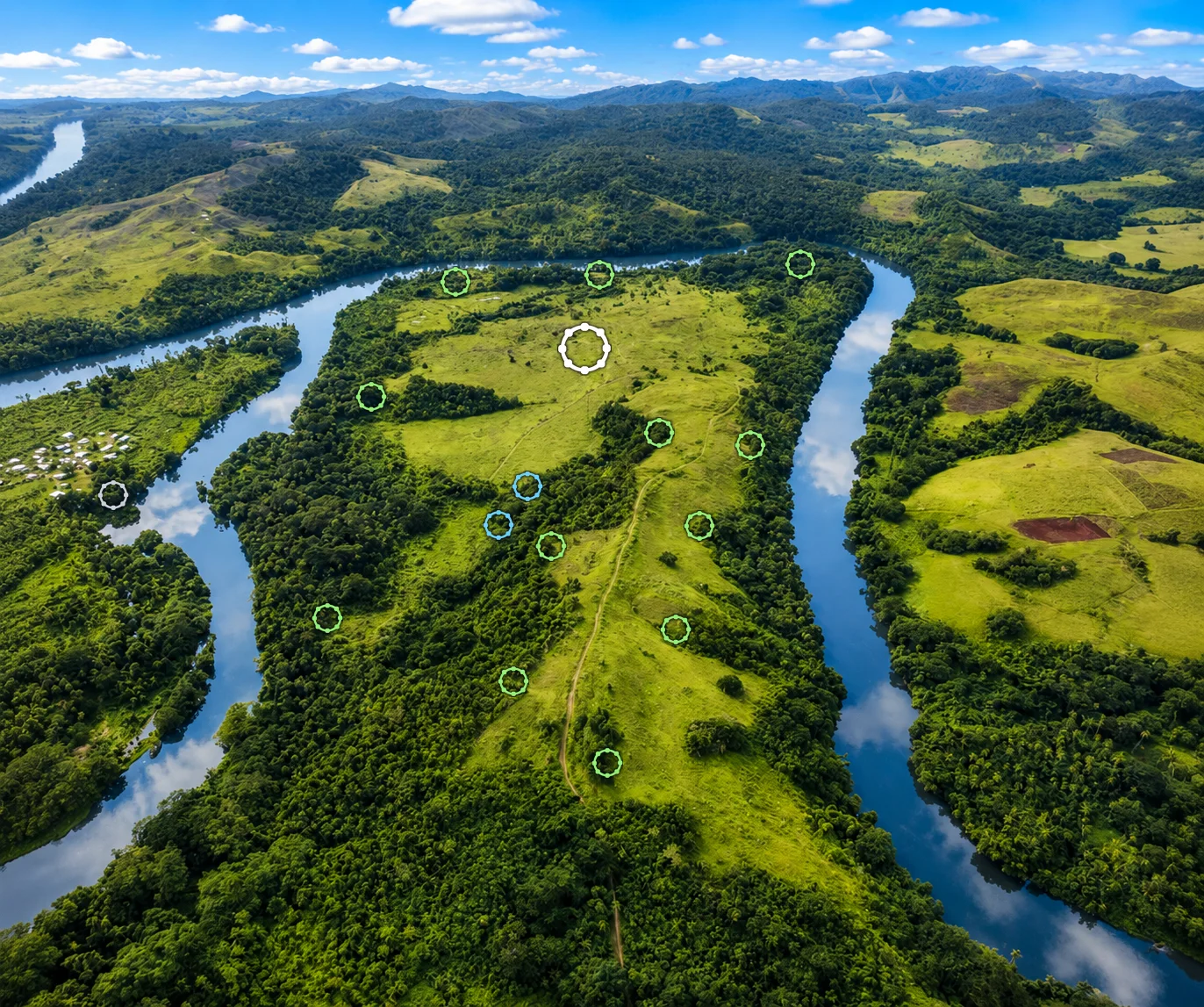
Site map
 Sky Circle
 Stardome
 Bamboo Cabin
 Nakanacagi Village
Includes planned sites.
Your stay
Each one is tucked away in its own secluded part of the rainforest. Retreat types below are exclusive and not combined. A minimum booking policy applies.
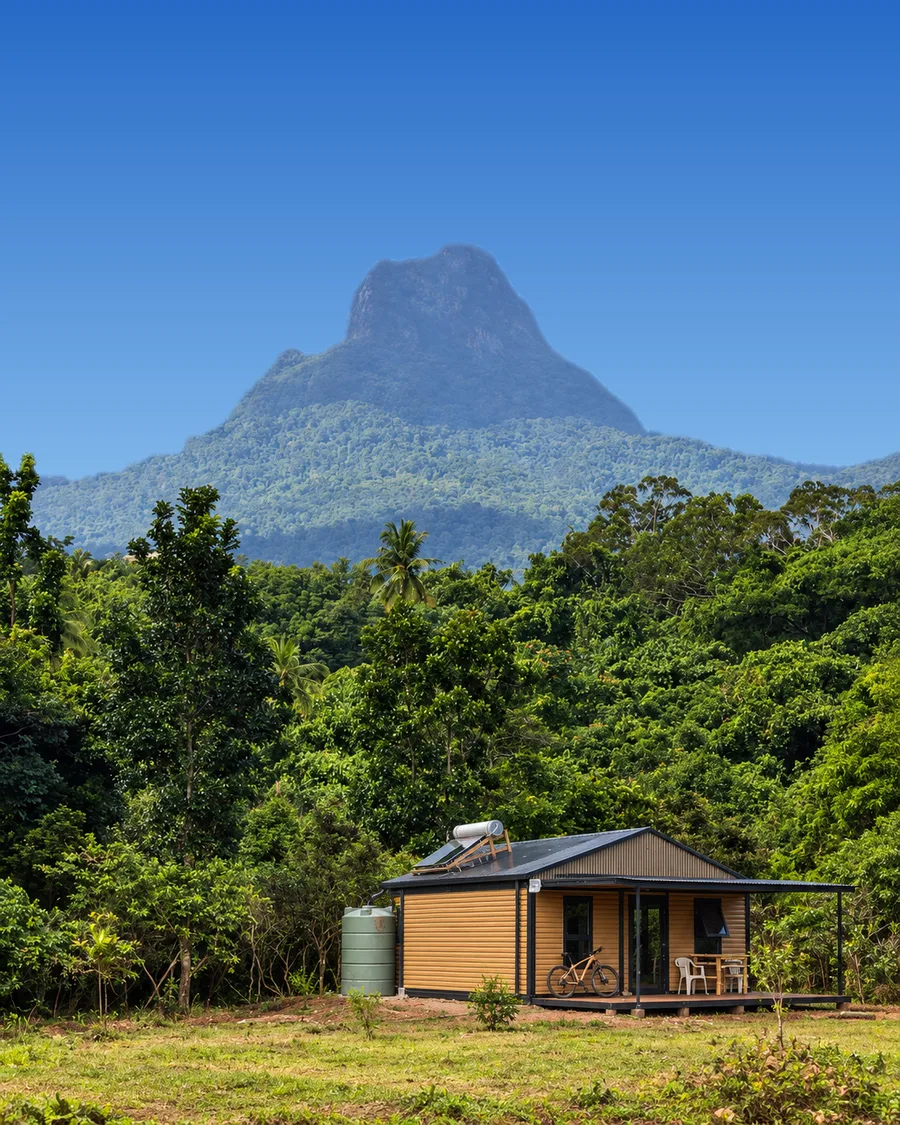
Make new memories with your children. Learn ancient cultural knowledge together under a humbling sky.
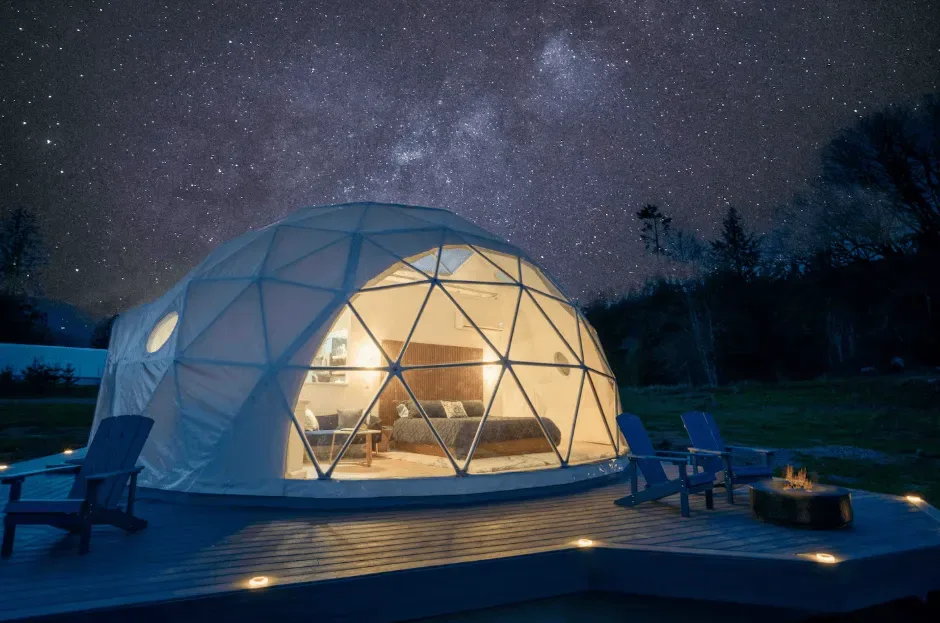
Our private star domes are tucked away in secluded parts of the rainforest. Rekindle wild hearts and recall whispered promises under endless bejewelled skies.
Learn about Earth Sciences, Astronomy, Biomimicry - the practice of mimicking nature to solve problems. Learn "from" nature, not just "about" it. For students and teachers of all ages.
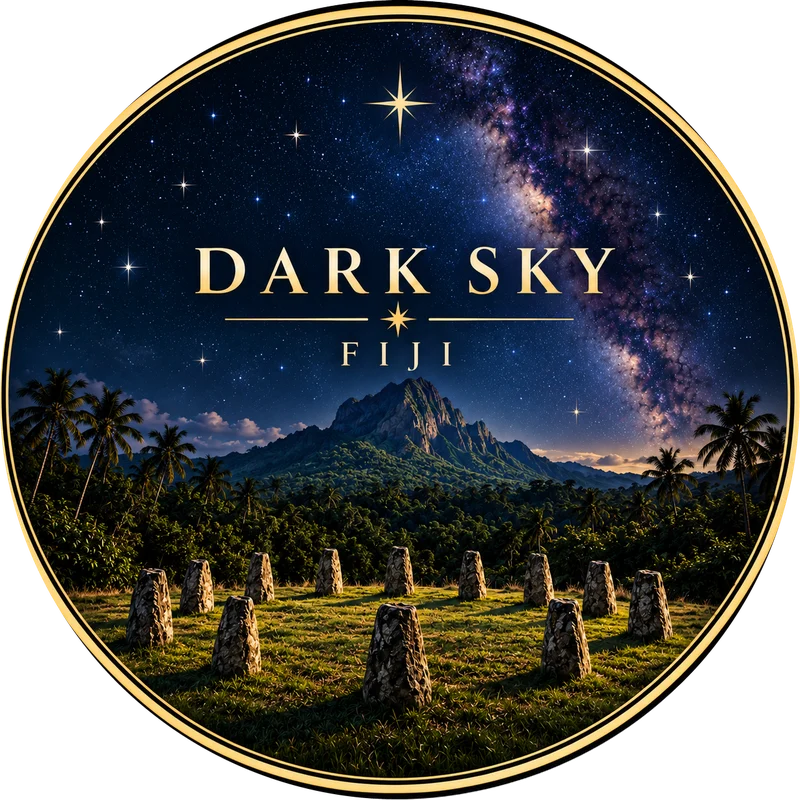
Coming to the estate - in design
For thousands of years people have built in stone to follow the sky. Stonehenge in England lines up with the midsummer sunrise and midwinter sunset. At Jantar Mantar in Jaipur, India, giant masonry instruments built in the early 1700s still tell the time and track the stars.
We have visited and researched these and other culturally significant astronomical "instruments" around the world, and with the guidance of experts we are designing our own: a 36 metre stone circle on a flat clearing of the estate, made to follow the sun, the moon and the stars from Dreketi through the whole year.
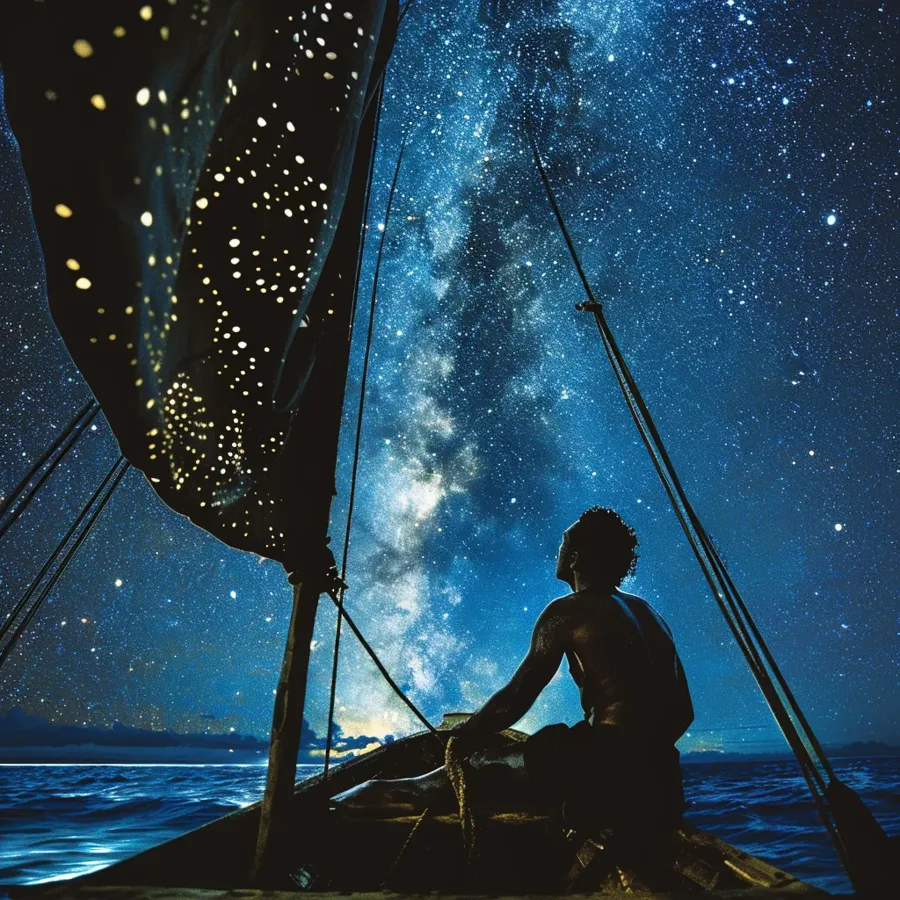
Most of the world's famous sky monuments, like Stonehenge, the pyramids of Giza and Jantar Mantar, sit far north of the tropics. Dreketi sits in the southern tropics, and that changes the whole sky. Here the sun passes straight overhead twice a year and the moon does so every month, something none of those great sites will ever see. The Southern Cross wheels around the south pole above you. Inspired by the ancient sky watchers who came before us, we are setting every stone for Dreketi's own sky. The circle honours their wisdom, opens a stargate to the Pacific heavens above us, and looks to a future where people everywhere slow down, look up and feel connected to the universe and to each other.
Part monument, part observatory, part stargate to the southern skies, the circle will let anyone read the heavens with their own eyes, just as our ancestors did, and carry that knowledge forward to the generations still to come.
times a year the sun passes directly overhead, around 8 November and 3 February. Stand in the circle at noon and you cast no shadow. This never happens at Stonehenge, Giza or Jaipur.
times a year, once every lunar month, the moon passes directly overhead. At Stonehenge, Giza and Jaipur it never does.
of the whole sky rises above Dreketi over a year, compared with about 81% at Stonehenge. The Southern Cross and Orion are both on show.
Celestial calendar
Plan your stay around the celestial calendar and get the best of all worlds. New moons bring the darkest nights for stargazing; full moons illuminate the forest and night-fishing along the river. Dates are in Fiji time.
How dark is Dark?
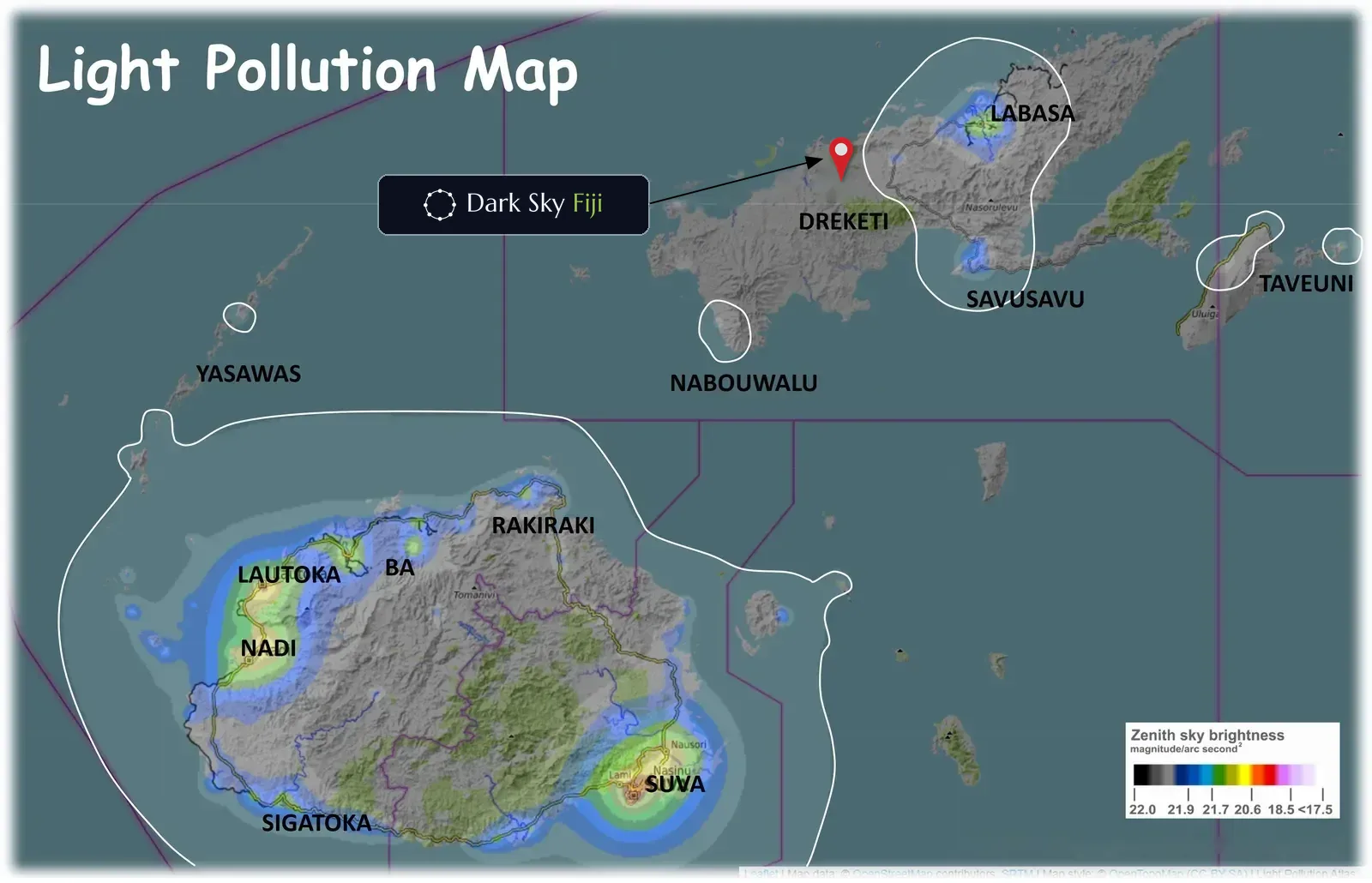
Light pollution maps show how much artificial light brightens the night sky. Dreketi lies in the darkest zone of Vanua Levu (and all of Fiji), far from the "halo" town lights of Labasa and Savusavu.
| Place | Bortle | Sky brightness (SQM) | Visible stars | Dreketi has |
|---|---|---|---|---|
| Dreketi (Dark Sky Fiji) | 1.0 | 21.90 | 6,000+ | |
| Savusavu | 4.1 | 21.58 | 1,000 to 2,000 | about 2X |
| Labasa | 4.6 | 20.97 | 1,000 to 2,000 | about 2X |
| Nadi | 5.5 | 20.01 | 1,000 to 2,000 | about 3.5X |
| Suva | 6.0 | 19.48 | 200 to 500 | about 5X |
| Auckland | 8.1 | 18.30 | under 200 | about 15X |
| Melbourne | 9.0 | 17.36 | under 200 | about 35X |
| Los Angeles | 9.0 | 17.02 | under 200 | about 50X |
"Dreketi has" shows how many times more stars you can see at Dreketi on a clear, moonless night. Town and city centre readings, Oct 2026 estimates. A higher SQM means a darker sky. Source: Light pollution maps: https://lightpollutionmap.app
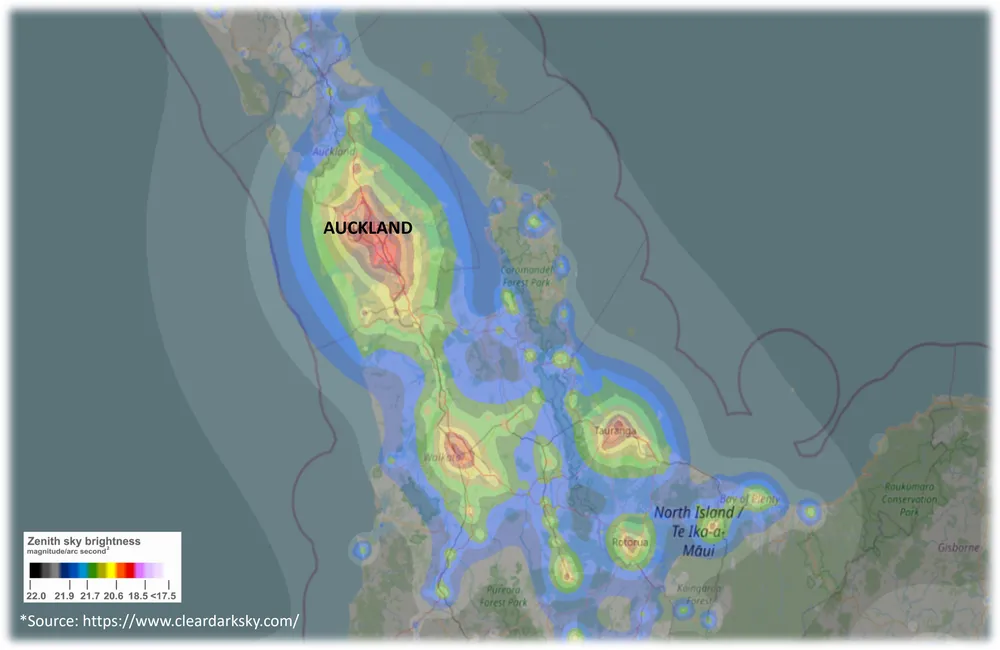
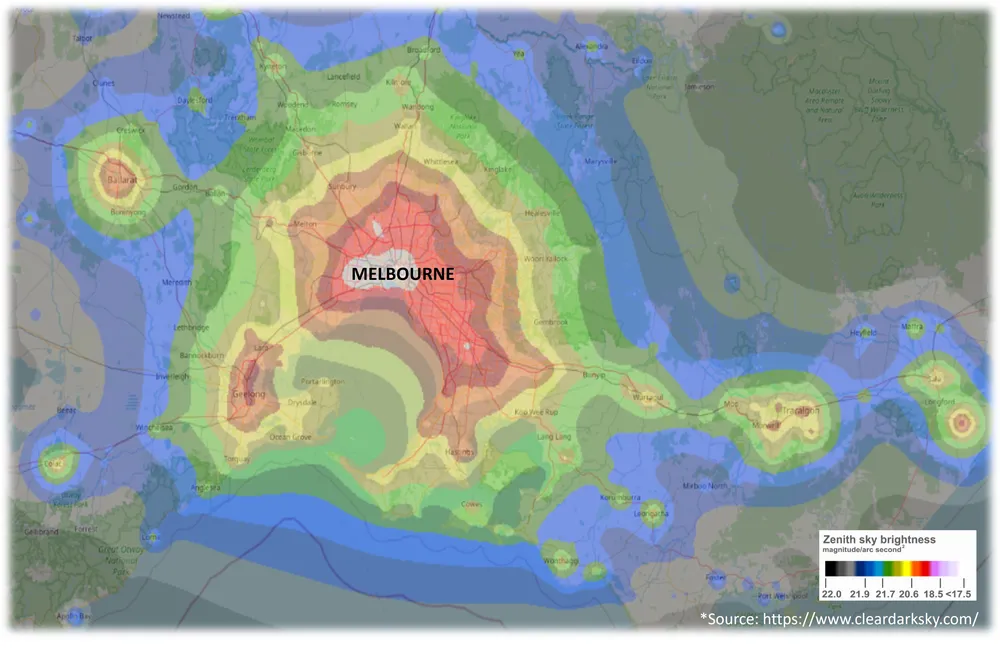
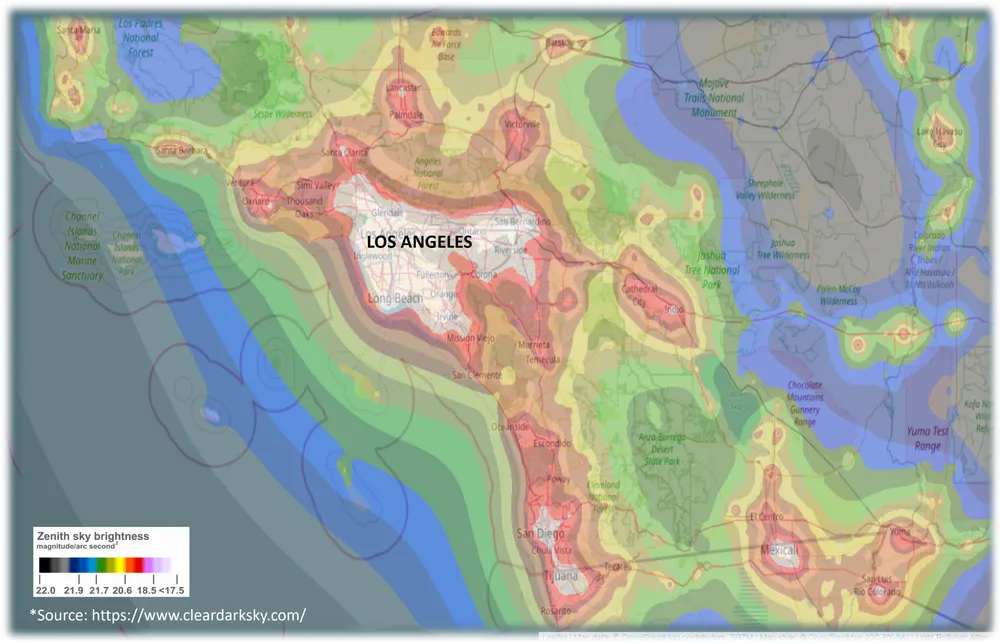
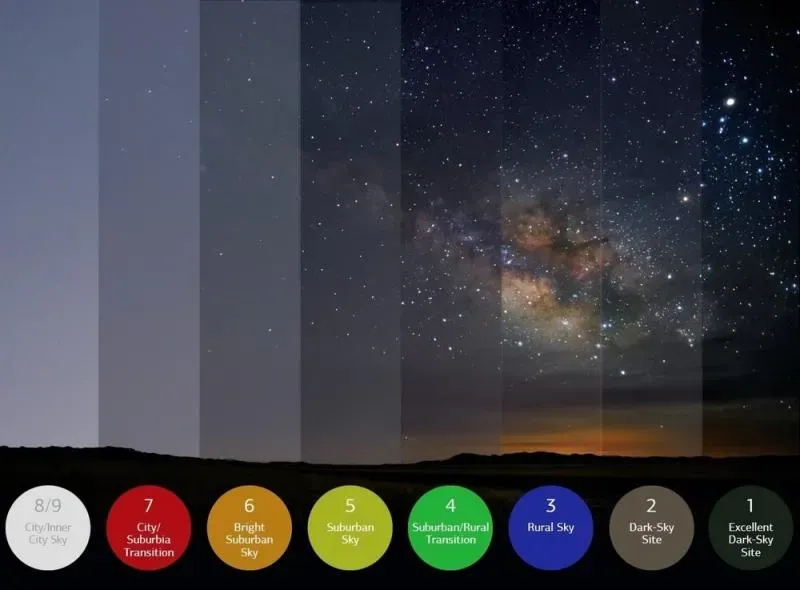
Astronomers rate night skies from 9 (inner city, only a few bright stars) to 1 (an excellent dark sky site, where the Milky Way is bright enough to cast shadows).
Most of our guests live under a 7 to 9 sky. At Dreketi you can see what the night sky looked like before electric light.
Light pollution maps: https://lightpollutionmap.app
Advocacy
A night sky worth saving ... forever.
In 2024 our founder, Dr Darius Singh, published his vision to the international dark sky community at the Starlight Conference in Tekapo, New Zealand: "Gaia (Earth) Estate - Fiji's 1st Dark Sky Project".
In 2025 an eCoast study for the New Zealand chapter of the International Dark-Sky Association assessed the Dreketi River area as dark-sky habitat. It is home to the only known maternity roost of the Fijian free-tailed bat and to river shark nursery habitat.
In 2026 we made a submission to Fiji's Ministry of Environment for 2km of red street lighting on the main road stretch through Dreketi to follow Denmark's lead, which others have already done in France, UK, Germany, Netherlands, and Belgium (see PBS news report). In Gladsaxe, near Copenhagen, Denmark white streetlights along a bat corridor have been replaced with bat-friendly red light. We need the same visionary thinking here, to protect the endangered Fijian free-tailed bats and to future-proof a dark sky zone for generations to come.
Book now
A romantic getaway, a digital detox or an astro-tourism adventure with the kids. Send us your details and we will reply with available dates, prices and our booking terms.
Places are limited and seasonal, so we recommend booking early.